Genesis
Moses (traditional attribution)
Genesis traces the origins of the universe, humanity, sin, and redemption. The book divides into two major sections: primeval history covering creation through Babel, and patriarchal history following Abraham, Isaac, Jacob, and Joseph. God creates a perfect world, but human rebellion brings death and corruption. Yet God does not abandon his creation. He calls Abraham and establishes a covenant promising land, descendants, and blessing to all nations. Through family struggles, famine, and exile, God preserves the chosen line and positions Israel in Egypt, setting the stage for the Exodus.
Chapters
Book Outline
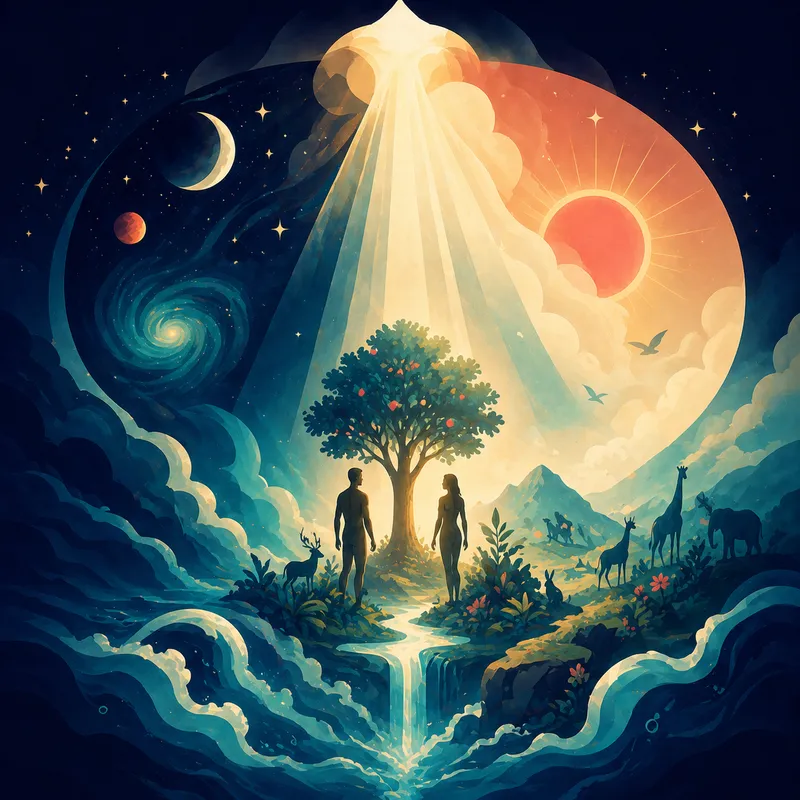
God creates the heavens, earth, and all living things in six days. He forms Adam from dust and Eve from Adam's rib, placing them in Eden with one prohibition.
The serpent deceives Eve; Adam and Eve eat the forbidden fruit. Sin enters the world bringing death, toil, and separation from God. Cain murders Abel. Humanity multiplies but wickedness spreads.
Wickedness covers the earth. God sends a flood to judge humanity but preserves Noah and his family in the ark. After the flood, God establishes a covenant with Noah, promising never to destroy the earth by water again.
Noah's descendants repopulate the earth. At Babel, humanity unites in rebellion, building a tower to make a name for themselves. God confuses their language and scatters them across the earth.
God calls Abram from Ur, promising to make him a great nation and bless all peoples through him. Abraham journeys to Canaan, receives the covenant of circumcision, intercedes for Sodom, and demonstrates supreme faith by offering Isaac. Sarah dies and Abraham secures a wife for Isaac.
Isaac fathers Esau and Jacob. Jacob deceives his father to obtain the blessing, flees to Laban, wrestles with God at Peniel, and is renamed Israel. He reconciles with Esau and settles in Canaan. His twelve sons become the tribes of Israel.
Joseph's brothers sell him into slavery. In Egypt, he rises from prisoner to prime minister through divine wisdom. During famine, his brothers come to Egypt for grain. Joseph reveals himself, forgives them, and brings his family to Egypt where they prosper under Pharaoh's protection.
Key Themes
God as Creator
Genesis opens with God creating everything from nothing by his word. He exists before all things, depends on nothing, and exercises absolute sovereignty over his creation. The universe is not eternal or self-existent; it owes its existence entirely to God's will and power.
Human dignity and depravity
Humans alone bear God's image, giving them unique value and purpose. Yet the fall corrupted human nature. From Cain's murder to the wickedness before the flood to Joseph's brothers' betrayal, Genesis shows humanity's persistent tendency toward evil while affirming that the image of God remains.
Covenant faithfulness
God binds himself to his people through covenants. He promises Noah never to flood the earth again. He commits to Abraham with unconditional promises of land, seed, and blessing. Despite human failure, God remains faithful to his word across generations.
Divine providence
God works through human choices, even sinful ones, to accomplish his purposes. Joseph's brothers meant evil, but God meant it for good. Famines, family conflicts, and foreign lands all serve God's plan to preserve and position his people.
Blessing and curse
Blessing flows from obedience and relationship with God; curse follows rebellion. Adam's disobedience brought curse on the ground. Through Abraham, blessing will reach all nations. The patriarchal blessings shape the destiny of tribes and peoples.
Election and promise
God chooses particular people for his purposes. He selects Abel over Cain, Seth's line over others, Noah from his generation, Abraham from the nations, Isaac over Ishmael, Jacob over Esau. Election is not based on merit but on God's sovereign choice.
Key Verses
In the beginning God created the heaven and the earth.
The opening declaration of Scripture establishes God as eternal Creator. Before anything existed, God was. All reality originates from his creative act.
So God created man in his own image, in the image of God created he him; male and female created he them.
Humanity's unique dignity comes from bearing God's image. This truth grounds human rights, the sanctity of life, and the equality of male and female before God.
And I will put enmity between thee and the woman, and between thy seed and her seed; it shall bruise thy head, and thou shalt bruise his heel.
The first messianic prophecy, called the protoevangelium. God promises that a descendant of the woman will defeat the serpent, pointing forward to Christ's victory over Satan.
And I will make of thee a great nation, and I will bless thee, and make thy name great; and thou shalt be a blessing: And I will bless them that bless thee, and curse him that curseth thee: and in thee shall all families of the earth be blessed.
The Abrahamic covenant forms the foundation of redemptive history. Through Abraham's line, blessing will extend to all nations, fulfilled ultimately in Christ.
And he believed in the LORD; and he counted it to him for righteousness.
This verse becomes foundational for the doctrine of justification by faith. Paul cites it to show that righteousness comes through faith, not works.
But as for you, ye thought evil against me; but God meant it unto good, to bring to pass, as it is this day, to save much people alive.
Joseph's declaration summarizes divine providence. God sovereignly works through human evil to accomplish good, a truth that reaches its climax at the cross.
Main Characters
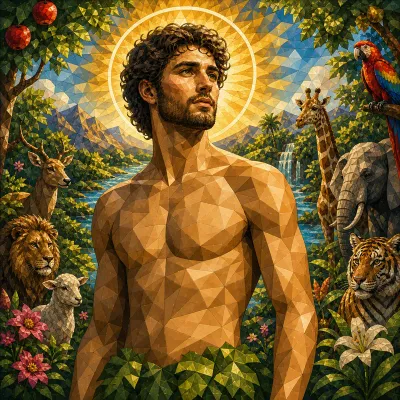
First human, created from dust, placed in Eden as God's image-bearer and representative. His disobedience brought sin and death to all humanity.

First woman, formed from Adam's side as his helper and equal. Deceived by the serpent, she ate the forbidden fruit and gave it to Adam.
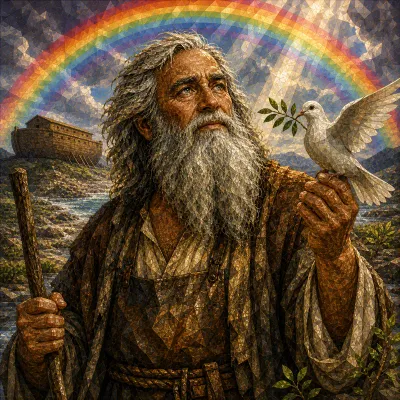
Righteous man in a corrupt generation. Built the ark at God's command, preserved humanity and animals through the flood, received God's covenant promise.
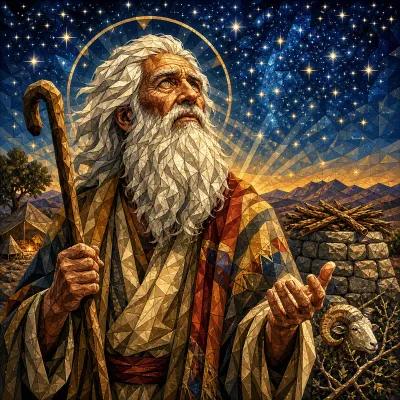
Father of faith, called from Ur to Canaan. Received God's covenant promises of land, descendants, and universal blessing. His faith was counted as righteousness.
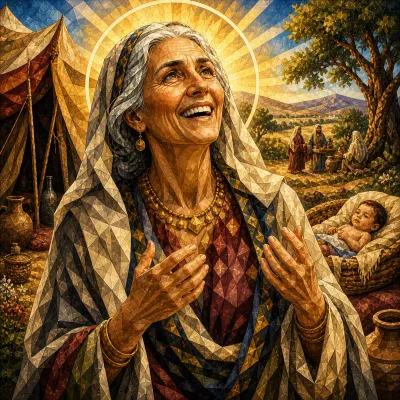
Wife of Abraham, mother of Isaac. Laughed at God's promise of a son in old age but saw it fulfilled. Died at 127 and was buried in the cave of Machpelah.
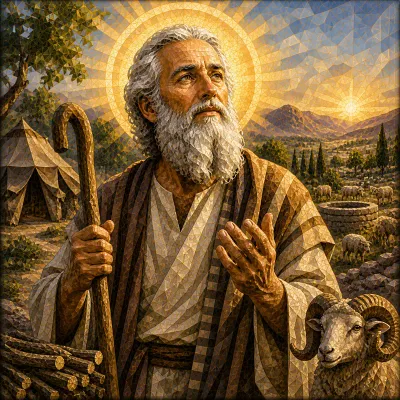
Son of promise born to Abraham and Sarah. Nearly sacrificed on Mount Moriah. Married Rebekah, fathered Esau and Jacob, passed the blessing to Jacob.
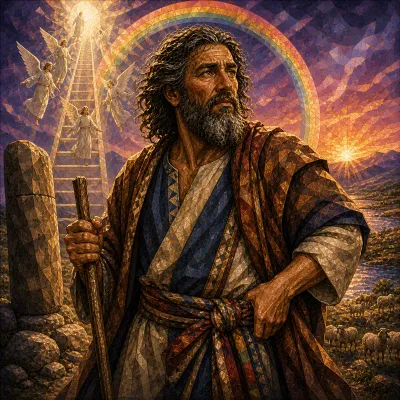
Younger twin who obtained Esau's birthright and blessing. Wrestled with God and was renamed Israel. Father of twelve sons who became the tribes of Israel.
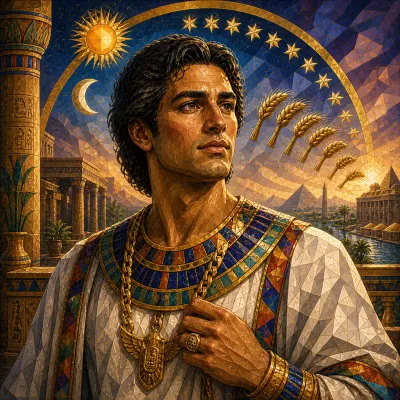
Favored son of Jacob, sold into slavery by his brothers. Rose to power in Egypt through divine wisdom, saved his family during famine, demonstrated forgiveness and providence.
Biblical Locations
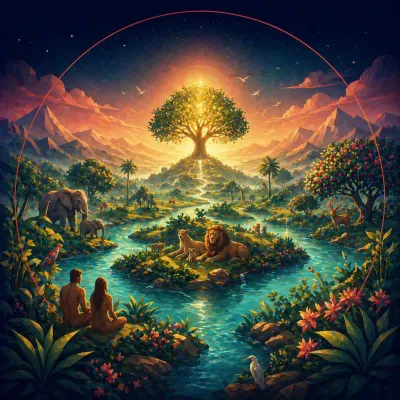
Place of human creation and the fall. God planted this garden eastward and placed Adam there to tend it. After sin, Adam and Eve were expelled and the way was guarded.
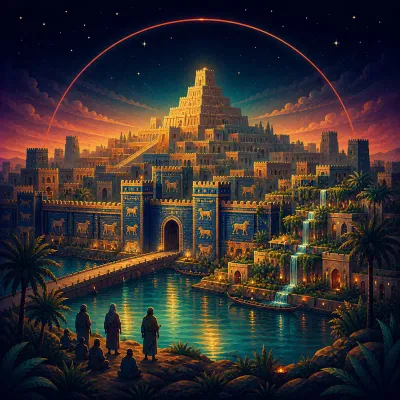
Site of the Tower of Babel where humanity united in rebellion against God. He confused their language and scattered them, explaining the origin of nations and languages.
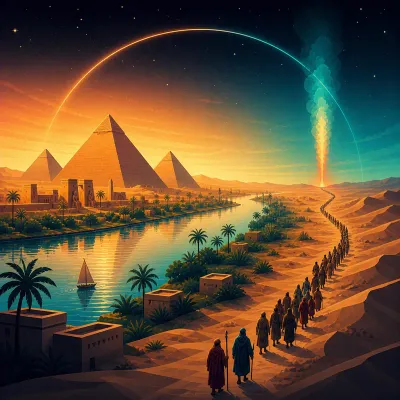
Joseph rose to power here and brought his family during famine. Israel grew into a nation in Egypt, setting the stage for the Exodus.
Connection to Christ
The Seed of the Woman
The promise that the woman's seed will crush the serpent's head points to Jesus defeating Satan through the cross.
GEN 3:15Abraham's Blessing
Through Abraham's seed all nations are blessed, fulfilled in Christ as Paul explains.
GAL 3:16The Substitute Ram
The ram caught in the thicket, provided as a substitute for Isaac, foreshadows God providing his own Son as the sacrifice for sin.
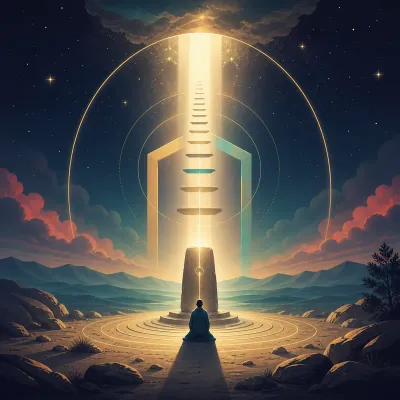
GEN 22:13Jacob's Ladder
Angels ascending and descending on a ladder points to Christ as the way between heaven and earth, as Jesus himself declares.
JHN 1:51Joseph the Savior
Rejected by his brothers yet becoming their savior, Joseph prefigures Christ rejected by his own people yet saving them.
GEN 50:20Grace over Merit
The pattern of the younger son receiving blessing over the firstborn hints at grace overturning natural expectations, fulfilled in Christ.
ROM 9:10-13