Exodus
Moses (traditional attribution)
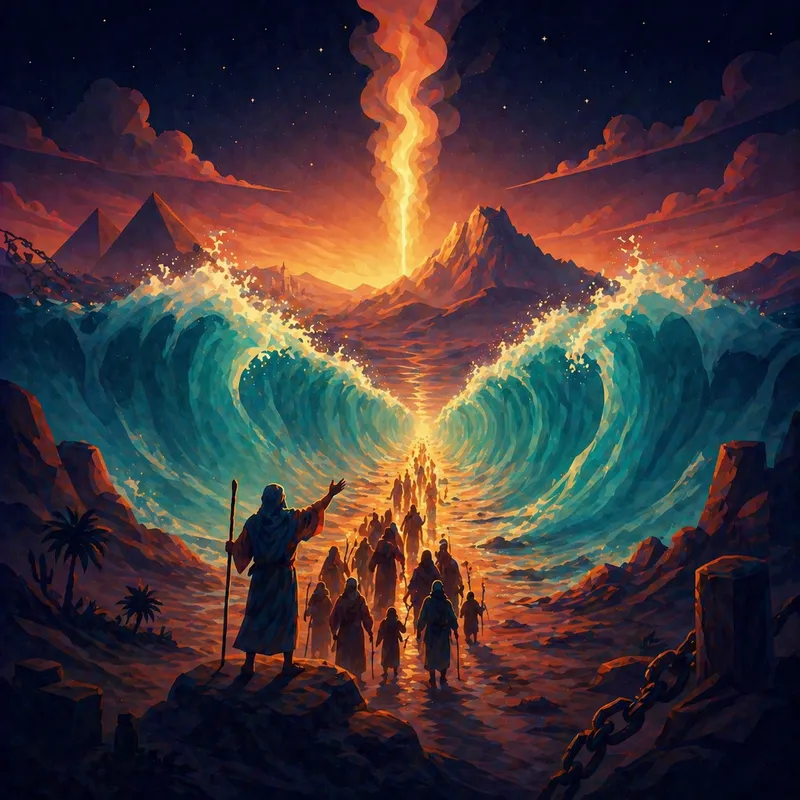
Exodus records Israel's deliverance from Egyptian slavery and the establishment of the covenant at Mount Sinai. It tells the story of Moses' call, the ten plagues, the Passover, the crossing of the Red Sea, the giving of the Law, and the construction of the Tabernacle. The book reveals God as the Redeemer who keeps his promises to Abraham and forms Israel into a holy nation.
Chapters
Book Outline
Israel's oppression under Pharaoh and the birth and early life of Moses, who is preserved by God's providence and raised in Pharaoh's court.
God reveals himself to Moses at the burning bush, declares his name I AM, and commissions Moses to lead Israel out of Egypt.
The confrontation with Pharaoh, the ten plagues demonstrating God's power over Egypt's gods, and the institution of Passover as Israel's deliverance.
Israel's departure from Egypt, God's guidance by pillar of cloud and fire, the miraculous crossing of the Red Sea, and the destruction of Pharaoh's army.
God provides manna and quail in the wilderness, water from the rock, and victory over the Amalekites. Jethro advises Moses on leadership.
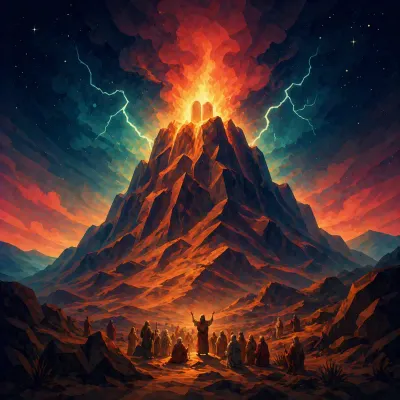
God descends on Mount Sinai, gives the Ten Commandments and the Book of the Covenant, and establishes Israel as his treasured possession and kingdom of priests.
Detailed plans for the Tabernacle, its furnishings, the priestly garments, and the consecration of Aaron and his sons for service.
Israel's apostasy with the golden calf, Moses' intercession, the breaking and renewal of the covenant tablets, and God's revelation of his character.
The people's generous offerings, the skilled craftsmen's work, the completion of the Tabernacle, and God's glory filling it.
Key Themes
Redemption and deliverance
God hears the cry of his oppressed people and acts to redeem them from slavery. The Exodus becomes the defining act of salvation in the Old Testament, remembered and celebrated throughout Israel's history.
The holiness of God
God reveals himself as utterly holy, set apart from all creation. His presence requires reverence, purification, and proper approach through appointed means.
Covenant relationship
God establishes a formal covenant with Israel, making them his treasured possession. This covenant includes both promises and obligations, blessings and curses.
God's presence with his people
Through the pillar of cloud and fire, and ultimately the Tabernacle, God demonstrates his desire to dwell among his people and lead them personally.
The power of God over false gods
The ten plagues systematically demonstrate God's supremacy over the gods of Egypt. Each plague targets a specific Egyptian deity, proving the Lord alone is God.
Worship and sacrifice
The detailed instructions for the Tabernacle and priesthood establish the pattern for approaching a holy God through sacrifice, mediation, and reverent worship.
Key Verses
And God said unto Moses, I AM THAT I AM: and he said, Thus shalt thou say unto the children of Israel, I AM hath sent me unto you.
God reveals his eternal, self-existent nature through his personal name. This name emphasizes God's unchanging faithfulness and sovereign presence.
And the blood shall be to you for a token upon the houses where ye are: and when I see the blood, I will pass over you, and the plague shall not be upon you to destroy you, when I smite the land of Egypt.
The Passover lamb's blood protects Israel from judgment. This foundational act of redemption foreshadows Christ, the true Passover Lamb.
Now therefore, if ye will obey my voice indeed, and keep my covenant, then ye shall be a peculiar treasure unto me above all people: for all the earth is mine: And ye shall be unto me a kingdom of priests, and an holy nation.
God declares his purpose for Israel: to be his special treasure, a kingdom of priests mediating his presence to the nations, and a holy nation set apart for his glory.
I am the LORD thy God, which have brought thee out of the land of Egypt, out of the house of bondage. Thou shalt have no other gods before me.
The preface and first commandment of the Decalogue. God's redemptive act grounds the covenant obligations; Israel's exclusive loyalty flows from gratitude for deliverance.
And he said, My presence shall go with thee, and I will give thee rest.
After the golden calf incident, God reassures Moses that his presence will continue with Israel. God's presence is the distinguishing mark of his people.
The LORD, The LORD God, merciful and gracious, longsuffering, and abundant in goodness and truth, Keeping mercy for thousands, forgiving iniquity and transgression and sin.
God's self-revelation of his character to Moses. This declaration becomes the most quoted Scripture passage within Scripture itself, defining who God is.
Main Characters
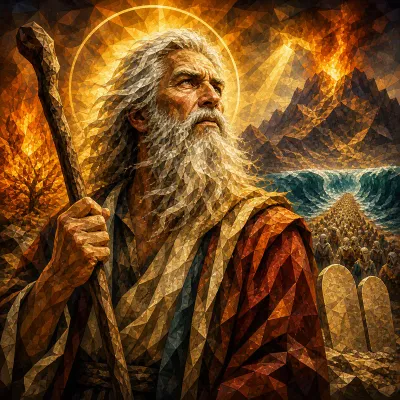
Deliverer of Israel, mediator of the covenant, lawgiver, and prophet who spoke with God face to face
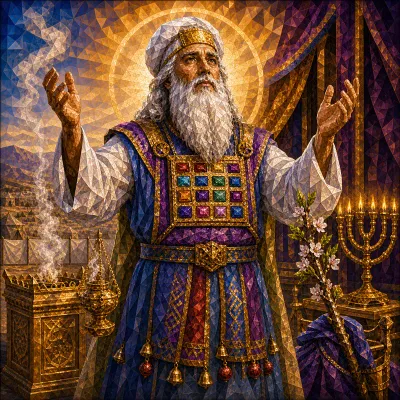
Moses' brother, spokesman before Pharaoh, and first high priest of Israel
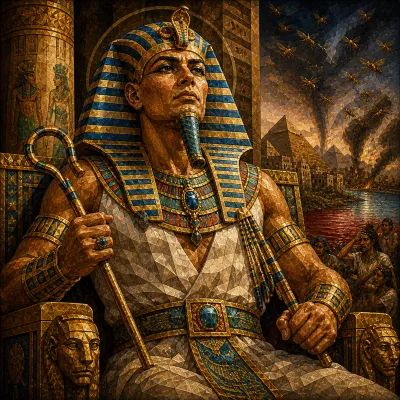
King of Egypt who oppressed Israel and hardened his heart against God, ultimately destroyed at the Red Sea
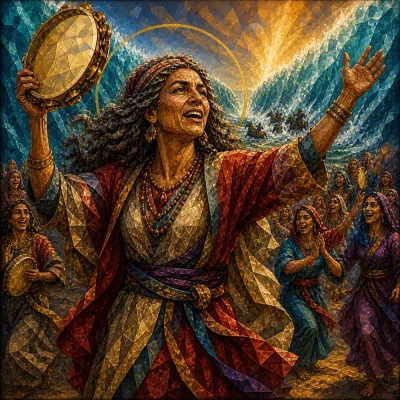
Sister of Moses and Aaron, prophetess who led Israel in worship after the Red Sea crossing
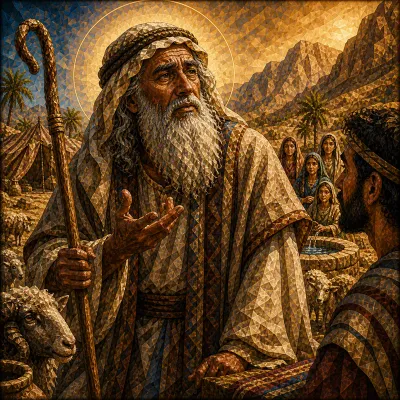
Moses' father-in-law, priest of Midian who advised Moses on leadership and organization
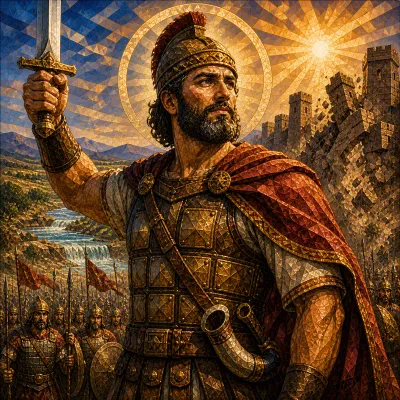
Moses' assistant and military leader who fought the Amalekites and accompanied Moses on Sinai
Biblical Locations
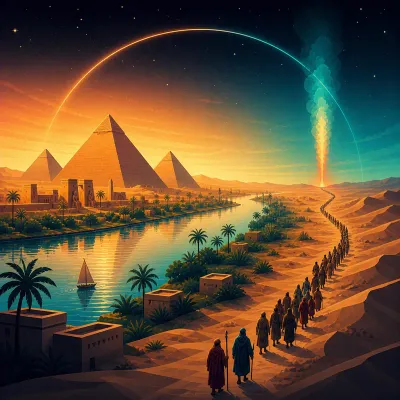
Land of Israel's slavery and the setting for God's dramatic acts of judgment and redemption through the plagues
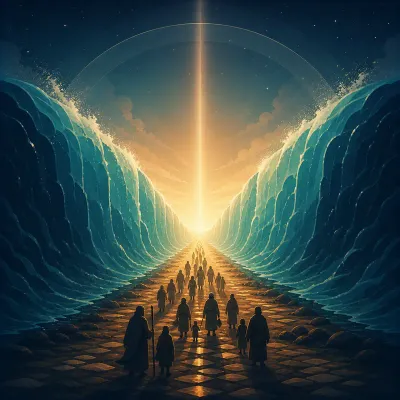
Site of Israel's miraculous deliverance where God parted the waters and destroyed Pharaoh's pursuing army
Connection to Christ
The Passover Lamb
The Passover lamb whose blood protected Israel from the angel of death directly foreshadows Christ. Paul declares that Christ our Passover has been sacrificed for us, and John the Baptist identified Jesus as the Lamb of God who takes away the sin of the world.
EXO 12:13The Greater Moses
Moses as deliverer, mediator, and lawgiver foreshadows Christ. Like Moses, Jesus delivered his people from bondage, mediated a new covenant, and gave the law of the kingdom. Moses himself prophesied that God would raise up a prophet like him whom the people must heed.
EXO 3:10The Rock that Was Struck
The rock that Moses struck to bring forth water for Israel is identified by Paul as Christ. Just as water flowed from the smitten rock to give life to the thirsty people, so Christ was struck for us that living water might flow to all who believe.
EXO 17:6The Bread from Heaven
The manna that sustained Israel in the wilderness pointed to Christ, the true bread from heaven. Jesus declared that he is the bread of life; whoever comes to him will never hunger, and whoever believes in him will never thirst.
EXO 16:15The Tabernacle
The Tabernacle where God dwelt among his people foreshadows Christ, in whom the fullness of deity dwells bodily. John writes that the Word became flesh and tabernacled among us, and we beheld his glory.
EXO 25:8The High Priest
Aaron as high priest who mediated between God and Israel foreshadows Christ, our great High Priest who has passed through the heavens and ever lives to make intercession for us.
EXO 28:1