
Ecclesiastes
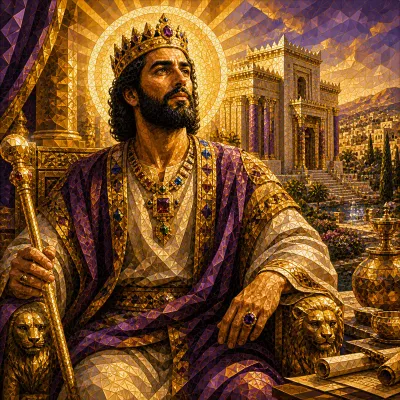
Solomon (the Teacher/Qoheleth)
Ecclesiastes is a philosophical reflection on life's meaning from the perspective of one who has experienced everything 'under the sun.' The Teacher explores pleasure, work, wisdom, wealth, and achievement, finding all to be ultimately 'vanity' or 'meaningless' apart from God. The book concludes that true meaning comes from fearing God and keeping His commands.
Chapters
Book Outline
The Teacher's identity, the theme of vanity, the endless cycle of life.
Experiments with pleasure, work, wisdom, and wealth all prove unsatisfying.
Practical wisdom for living in a fallen world with its uncertainties.
Remember your Creator in youth; the final verdict: fear God and keep His commands.
Key Themes
Vanity of Life Under the Sun
Without God, all human pursuits are ultimately meaningless and fleeting.
The Limits of Human Wisdom
Even great wisdom cannot answer all of life's questions or prevent death.
Enjoying God's Gifts
In the midst of life's meaninglessness, we should receive daily pleasures as gifts from God.
Fear of God
The only source of true meaning is reverent relationship with God.
Key Verses
Meaningless! Meaningless! says the Teacher. Utterly meaningless! Everything is meaningless.
The thematic statement establishing the book's perspective on life apart from God.
There is a time for everything, and a season for every activity under the heavens.
Introduction to the famous 'time' poem acknowledging life's rhythms.
Fear God and keep his commandments, for this is the duty of all mankind.
The book's conclusion, giving the answer to life's meaning.
Main Characters
Biblical Locations
Connection to Christ
Finding Rest in Christ
The weariness Ecclesiastes describes finds resolution in Jesus, who offers rest to all who labor.
MAT 11:28-29True Satisfaction
What Solomon could not find in earthly pursuits is found in Christ, the bread and water of life.
JHN 6:35Eternal Life
Ecclesiastes points beyond the grave to eternity, fulfilled in Christ who gives eternal life.
JHN 11:25-26